
Marzouq Halabi: The ethics of a tiring profession

Professional ethics are the principles, “rules” and “systems” that have accumulated within the framework of a specific profession throughout its history and through the efforts of those in charge of it. Any discussion of ethics is ultimately a philosophical approach that goes back to the origin of the profession and those values that exist at its foundation. In its beginning, they are those regulating rules that frame a specific human activity that later turned into a profession.
The film insulting the Prophet and the West’s double standards regarding freedom of expression

My evening was not ordinary, it was burdened with news from the Arab and Islamic world about protests against the production of a film insulting the Prophet, peace and blessings be upon him, called “Innocence of Muslims.” Part of those demonstrations were indeed in support of the noble Prophet, and another part seemed to me to be recording a political stance, nothing more. Regardless, I decided to escape from this huge amount of news to my imaginary world, where I practice my human nature and listen to songs that help me reconcile with myself and clear my mind to advance with the mentality of a warrior to the upcoming battles.
Amal Jamal: Chance and Politics

I would like to start by questioning whether politics and chance are companions; in politics there are no coincidences, and in coincidence there is no politics. This does not mean that certain political decisions cannot appear or be proposed as if they were the result of chance. Politics harnesses chance to remove the political character from politics and present it as a mere coincidence in order to limit objection to it or not alert those who object to it. And it, politics, sometimes means presenting certain matters as mere coincidence in order to erase their political character, despite prior planning and despite the clear calculations of profit and loss in the matter.
Israeli elections between changing personalities and stable policies
The results of the recent Israeli elections have sparked widespread controversy over several issues related to the relationship between expectations and the course of the elections on the one hand, and their political and partisan results and the structure of the government coalition on the other hand.
Her Majesty’s Service

This article discusses the emergence and development of neoliberal economic thought in Israel from the mid-1980s until the late 2000s, and focuses on the role of the Israeli media in general, and the economic media in particular, in promoting this thought, presenting it and pushing it as the only exclusive and “objective” economic intellectual approach on offer.
Land Day from the perspective of the Israeli media

It has become clear to all of us that the various media are not a channel that transmits the public mood to the government and legislative apparatus and vice versa, i.e. transmits the decisions and the prevailing mood among politicians to the public, but rather a means of crystallizing and taming public opinion by providing certain indications, vocabulary and information and linking some of them to each other, thus drawing a “logical” picture that is difficult for the “idle” reader to penetrate and analyze. From this perspective, the media is considered an integral part of the apparatuses of the dominant state or nation, and results from the goals of those apparatuses and their interactions with each other. As part of the apparatuses of the state and the dominant elite in Israeli society, it is considered an exclusionary apparatus that reinforces the marginalization of the marginalized and feeds on the public consensus (exclusionary Zionist) at times, and produces it at other times.
Inadequate media and a consumer society, on the absence of economic journalism in our local media

In order to advance economic media, there must be an incentive for this advancement. The incentive that I see, even if theoretically at this stage, is the transformation of our society internally from a mere consumer to an economic actor.
The movie “Bethlehem” and the efforts to humanize the “Shabak”…!

The following article is not an analysis of Israeli cinema. It is merely my impressions after watching the Israeli film “Bethlehem,” which was co-written with Israeli Yuval Adler by director Ali Waked from Jaffa. Watching it made me want to go back to the movie theaters again, hoping to find answers to many of the internal questions that came to mind, the most important of which was, “Is this the Palestinian?!”
Israel and its image in the West, between the American and European media

What the American media says on stations like Fox News and others that belong to right-wing parties is sometimes worse than what the Israeli media itself says about Israel and its racist policies against Arabs and Palestinians.
Sectarian media and the destruction of what remains

First, it cannot be said that all religious media falls under the description of sectarian or extremist media, and it is not objective to issue any general or general description of this media. Therefore, it is necessary to delineate this basic introduction before approaching any discussion on the subject, as the focus in the following lines is on the extremist and sectarian aspect of that media in particular.
Digital Collectivism, Virtual Intimacy, and Changing Patterns of Social Interaction / Professor Amal Jamal*
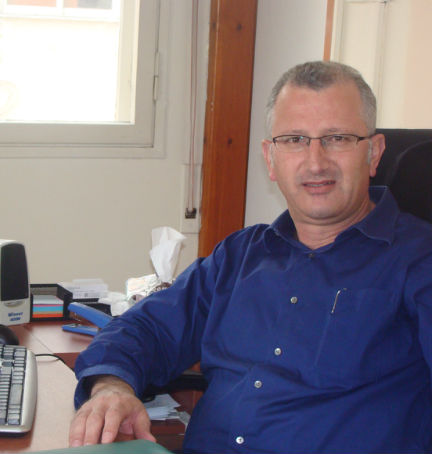
In light of the broad social and political movement in the Arab world, the question arises about the impact of the digital revolution and the growth of social media networks on the status and role of traditional mass media.
Electronic asylum and the removal of Palestinian identity

Mahmoud Haribat writes: In the same context, no user of the most popular social networking site, Twitter, can determine the most popular hashtags in Palestine.
The dialectic of the content and style of Arab political discourse and the ability to change
There are those who call for the separation of national and civil political work, claiming that parliamentary work should give priority to civil work, leaving national work for other contexts. There are also those who object to the style of some Arab representatives, without disagreeing with them on the content of what they say. They claim that the style of some representatives is provocative and therefore limited in their ability to convey their legitimate demands in a manner appropriate to the Jewish community and the government.
The components of Zionist thought that are described as “new” are not new at all, but rather extreme and extreme cases of ideas and beliefs that were rooted in traditional Zionist thought and were beautified under the pressure of circumstances – Anton Shalhat

Anton Shalhat
Source: Al-Araby Al-Jadeed
The book of the Palestinian researcher and academic, Amal Jamal, “Zionist Thought in the Labyrinths of Renewal and Modernization: The Dialectic of Internal Contradictions and Its Practical Implications” (Publications of the Institute for Palestine Studies – Beirut, 2016) presents an intellectual analysis of some Israeli political trends and movements in recent years, by monitoring the transformations and debates taking place over the past two decades.
Israeli Media: An Inciting Approach and the Lack of a Strategy to Confront It

The quantitative report, prepared by Ilam – the Arab Center for Media Freedoms, Development and Research, reveals the extent of the spread of inflammatory and racist discourse in the Israeli media.
We recycle life, shape our future!
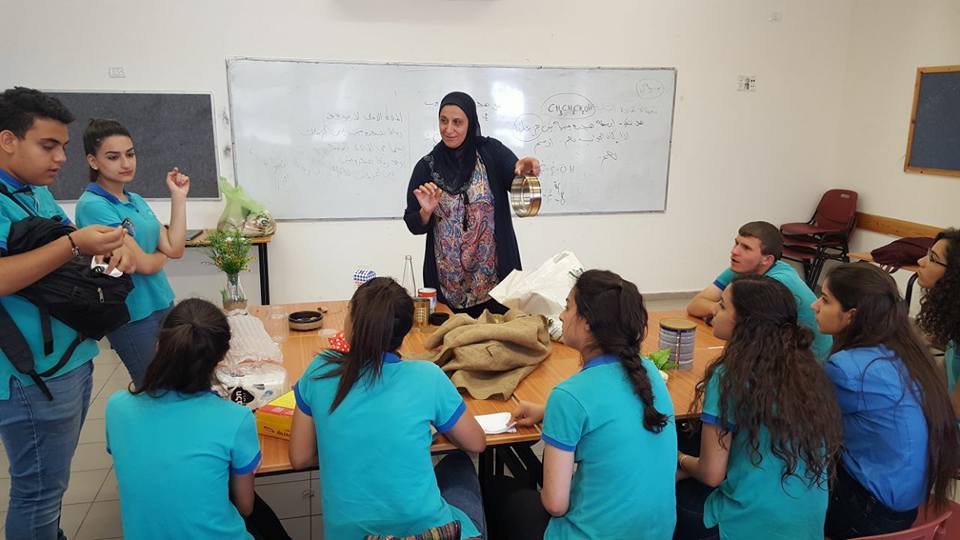
We recycle life, shape our future! By: Kawthar Ezz El-Din, Breaking the Glass Ceiling Together Project
Women will not remain hostages

Marwaft is not the first victim this year, as two women were killed before her, joining the list that reached 11 Arab women in 2019, victims of violence, patriarchy, and outdated views in our society.
The Solution to Violence: Education and Moral Commitment

I still have hope that it is possible to save our authentic society, and here I am repeating, “The world is still good.”
*Women and Violence*

Every woman has an important role in her position, whether as a grandmother, mother, wife, sister, friend, or study and work colleague, she has an influential role on her surroundings to varying degrees.
groan lamp

The question remains: Who lights the lamp in the dark of night? Where are the feminist men and why don’t they contribute to spreading their lifestyle through daily practices, even in the small details, to ensure a fair life for our women and influence the way of life of the rest?